Sunday, November 28, 2010

Painting Of Man And Woman Dancing

INTRODUCTION THE ORIGINS OF SCIENCE IN ACTION AWARD THE ACT


Since the first trials on humans, studies Edwards aroused strong opposition d fter having been able to successfully fertilize eggs taken from some women, the Medical Research Council decided not to fund the continuation of the project, but through a private donation of the two researchers were able to move forward. In vitro fertilization was then the center of a lively ethical debate, initiated by Edwards himself with an article written by attorney David Shape already anticipated many of the complicated questions that would have led to reproductive medicine.
Despite Edwards himself asserted that research on human reproductive cells and embryos should be carried out under precise ethical guidelines , and although it was assured that an ethics committee was created at the Bourn Hall Clinic, its work on artificial insemination met a strong opposition by religious leaders that they considered immoral by governments, which they thought was more important to limit fertility rather than promoting it, and some colleagues who had different ideas about the safety of embryos. "In retrospect - reads a note from the Nobel committee - it seems incredible that Edwards only been able to answer all the criticisms that flooded over the years, but which has remained so unflappable and determined in pursuing its objective science. "

Gums Very Sore After Tooth Extraction

La storia del nucleare in Italia

The exploitation of ' nuclear energy in Italy has ancient origins.
Despite the limitations due to both the result of the Second World War (which decreases the economic resources that could essere utilizzate per la ricerca) che agli accordi di pace (che imponevano all'Italia di non poter disporre di un'industria per l'arricchimento del combustibile), la decisione di costruire la prima centrale elettronucleare venne infatti presa già all'indomani della conferenza "Atomi per la Pace" di Ginevra dell'8-20 agosto 1955 e portò l'Italia, nel corso degli anni sessanta, ad avere sul proprio territorio tre impianti di prima generazione basati sulle tre più innovative tecnologie dell'epoca (i reattori di tipo BWR e PWR Magnox).
L'Italia nel 1966 figurava come il terzo produttore al mondo di energia nucleare dopo USA e Inghilterra. 

Essa si dotò di tre centrali of different production methods that accounted for virtually prototype models that were also used in the UK and U.S. experience abroad Reactor their parent dies.
The first Italian nuclear power plant was built in Latin, a plant with a single type of Magnox reactor, once completed May 12, 1963, it represented the most powerful model in Europe.
Eight months later, he was prepared to Sessa Aurunca, which followed less than a year after the installation of the Trinity, which had provided a PWR reactor at the time of its duties was lacentrale electronuclear more powerful in world.
The energy produced by these three plants was still low compared to national demand, which contributed to an average of 3-4%.
The 1st January 1970 began the construction of the fourth central to Caorso.
The first national energy plan launched in 1975 envisaged a strong development component of the power programs.
In addition to the three plants already in operation and one under construction, were proposed a number of sites for new power plants over the construction of some prototypes of innovative reactor.
The 1st July 1982 Delmi was placed in the central yard with two reactors BWR Montalto di Castro.
was also outlined a second power plant at Three.


Saturday, November 27, 2010

Menstruation With Sand

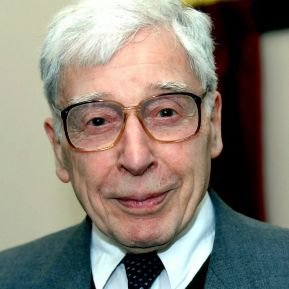
ROBERT EDWARDS

Robert Geoffrey Edwards was born in Manchester the September 27 1925. After graduating from Manchester Central High School, he served in the British military during the Second World War .
Al termine del conflitto, si laureò in Biologia con una specializzazione in Zoologia nella facoltà di Scienze Biologiche alla Bangor University, in Galles , per poi continuare i suoi studi presso l'Istituto di Embriologia animale afferente alla facoltà di Scienze Biologiche dell' Università di Edimburgo , dove conseguì il Ph.D nel 1955 ed iniziò ad interessarsi di fecondazione.
Passato all' Università di Cambridge nel 1963 , continuò a dedicarsi allo studio della fecondazione e nel 1968 iniziò a collaborare con il ginecologo Patrick Strepto on the issue of human artificial insemination .